
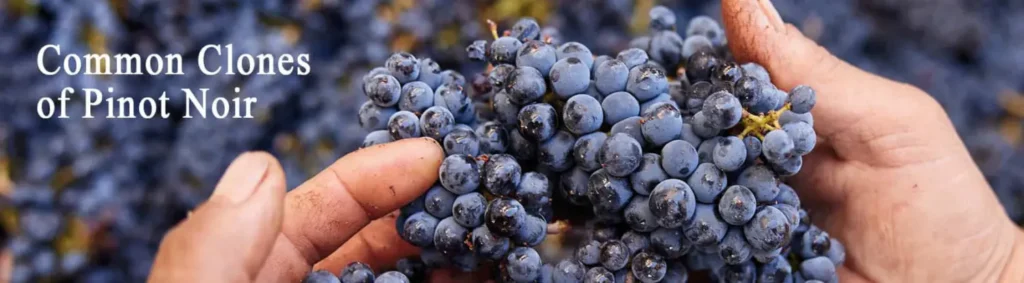
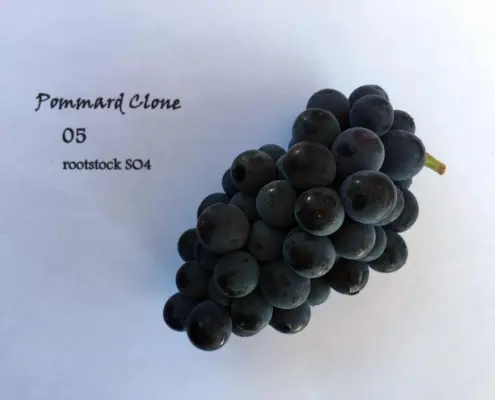
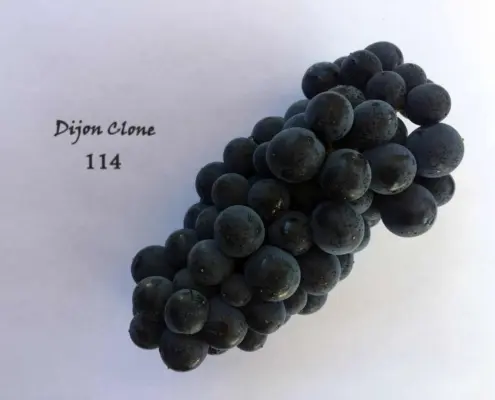
When you sip an Anderson Valley Pinot Noir, you’re tasting more than soil, sun, and fog – you’re tasting a mix of clonal personalities. Think of clones like sub-varietals: they share the Pinot Noir base DNA, but each brings its own voice. The magic happens when you blend them, layering aromatics, texture, structure, and nuance to make something that is greater than the sum of its parts.
Below, we spotlight a selection of clones commonly seen in AV, then take a quick detour through a few “heritage” or less-common ones (Swan, Wente, Martini, etc.). This isn’t a definitive list, but it gives curious drinkers a peek behind the curtain.
In Anderson Valley, where cool climates, fog, elevation shifts, and soil variability all have a voice, clonal choice becomes a secret dial for controlling energy, brightness, and concentration. Watch the YouTube videos below for perspectives from winemakers from Drew Wines, Bravium, Maggy Hawk, and Baxter, as well as from farmer Norman Kobler.
Mobile users see each row as a card. All content is live text for accessibility and SEO.
When you sip an Anderson Valley Pinot Noir, you’re tasting more than soil, sun, and fog – you’re tasting a mix of clonal personalities. Think of clones like sub-varietals: they share the Pinot Noir base DNA, but each brings its own voice. The magic happens when you blend them, layering aromatics, texture, structure, and nuance to make something that is greater than the sum of its parts.
Below, we spotlight a selection of clones commonly seen in AV, then take a quick detour through a few “heritage” or less-common ones (Swan, Wente, Martini, etc.). This isn’t a definitive list, but it gives curious drinkers a peek behind the curtain.
In Anderson Valley, where cool climates, fog, elevation shifts, and soil variability all have a voice, clonal choice becomes a secret dial for controlling energy, brightness, and concentration.
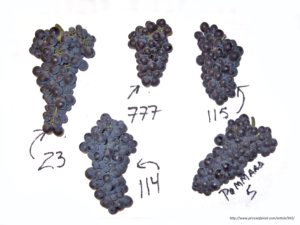
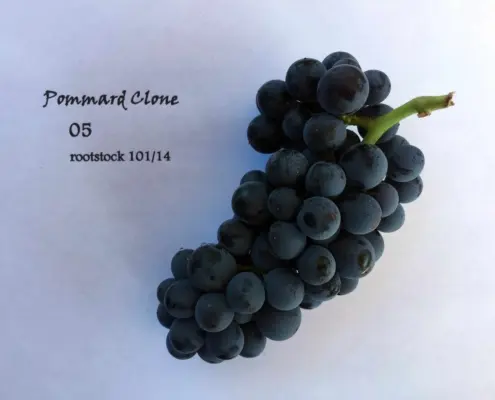
One reason these clones work so well together: Pommard gives you the backbone, 777 brings density and drama, 114 delivers lift and perfume, and 115 ties it together with balance. In many AV bottlings, the interplay between “earth + density” (Pommard/777) and “aromatic lift + finesse” (114/115) is what defines the house style.
Anderson Valley’s climate and terroir are complex: foggy mornings, high diurnal shifts, varied soils, and a range of exposures and slopes. No single clone “fits all.” Thus, a clonal mosaic allows a vineyard to coax out nuance — if a vintage is cooler, Dijon clones help preserve freshness; if the season is warm, Pommard or denser clones give weight without flabby structure.
By planting multiple clones, growers and winemakers give themselves flexibility: a blend can be dialed vintage by vintage to best express balance, site, and vintage character.
